
Who is behind CouncilTracer?
CouncilTracer is built and run by Darren Kruse — a City of Mitcham councillor who has sat through council meetings almost every Tuesday for about six years, a lawyer by day, and a network engineer before that. What he brings is knowing, from all those Tuesdays, how a council really works — which turns out to be the hard part — built with a great deal of help from AI.
That familiarity does a specific job, and it is worth being plain about why. A tool like this can produce an answer that reads fluently, is properly structured and cites its sources correctly — and is still wrong. A column can be read as meaning something it doesn't; a category can come back empty because of the words a question happened to use; a total can quietly leave out whatever the system couldn't classify. Errors of that kind don't look like errors. From the outside they are indistinguishable from good answers, unless you already know what the document actually says.
That is the part no amount of testing replaces. Software tests confirm the code does what its author expected — they cannot notice that a register records something the answer says it doesn't. Catching those takes someone who has read a great deal of the record closely, and that is knowledge anyone could acquire from the public documents, not access anyone else lacks. It is the same reading a resident, journalist or staff member could do; it has simply been done, week after week, for years.
So the tool gets checked the way you would check it: by asking real questions and reading the answers against documents already known. What that turns up is written down rather than quietly patched — the system prompts are published in full, and the known limits are set out under Governance, accuracy & limitations. An answer sounding confident is not evidence that it is right, which is exactly why every claim carries a citation you can open and check yourself.
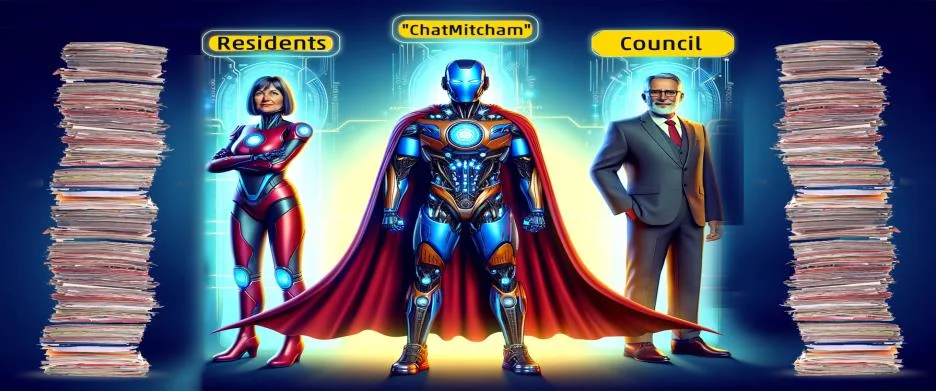
The idea began as a 2024 budget proposal he called “ChatMitcham”: let residents, staff and councillors simply ask the council's tens of thousands of pages of public documents instead of hunting through endless links. It wasn't funded — so he built it independently instead, entirely on documents any resident can already read.
The careful bit
He's a sitting councillor, so the lines are strict: CouncilTracer only ever reads the public record, uses no councillor or staff access a resident wouldn't have, and takes no side — it reports what the documents say and cites them. More under Governance, accuracy & limitations and Scraping & transparency.
Today it indexes the council's public record end to end — searchable, every answer cited, free to use — and it keeps growing. The aim is simple: make the public record genuinely usable, for residents, journalists and staff alike. See the live totals on the home page and the coverage page.
Related
See also: all FAQs · how it works · privacy policy